Gallos Kernow
Gallos Kernow is a computer-based learning game designed for primary school-aged pupils. It builds awareness and resilience for real-world situations by teaching safety concepts such as 999/111 emergencies, first aid kits, and fire safety and extinguisher use.
Value in one line: I led delivery and co-designed the core loop for a stakeholder-ready pitch demo, turning a broad brief into a focused, interaction-led guided learning experience that works in classrooms and at home.
Role: Production Coordinator, Game Designer, QA
Client: Cornwall Council’s Local Resilience Forum (LRF)
Context: MA Game Design (Falmouth University), commissioned brief
Team: 8-person cross-discipline team, 1 artist, 2 programmers, 5 designers (including me)
Timeline: Approximately 5 months (pre-production to production to post-production)
Deliverable: Stakeholder pitch demo to support approval and funding for further development
Constraints worth noting: Pitch build, fixed timeline, single artist, broad early concept space
Toolkit: Microsoft Planner (task board), Agile and Scrum, Scrum-style ceremonies (stand-ups, sprint planning, reviews, retros), stakeholder reviews, structured playtests, bug template and test matrix, design documentation, Microsoft Office, Jira
OUTCOMES
-
Delivered a playable pitch demo aligned to a real client brief through short iteration cycles and regular stakeholder reviews.
-
Protected scope and delivery predictability using clear priorities, visible ownership, and consistent follow-through.
-
Improved clarity through structured playtests where findings became tracked changes and re-checked improvements.
WHAT I OWNED
Production and delivery
-
Ran Scrum-style ceremonies, kept priorities and ownership visible in Microsoft Planner, and drove follow-through on actions and blockers.
-
Protected the demo milestone by setting scope boundaries (Core vs Later) and aligning the team to a single direction.
Game design
-
Co-designed the core loop and decision prompts so learning happens through interaction and feedback, not passive text.
-
Framed the experience as guided classroom play as well as home play, supported by tutorial sheets and a no-fail structure.
-
Example: the 999 vs 111 prompt was designed as a discussion trigger before the drill, supporting teacher-led facilitation.
QA and playtesting
-
Planned and documented playtests and stakeholder reviews, then converted findings into prioritised tasks and re-checks.
-
Created and used a bug template and test matrix to keep feedback consistent, actionable, and verifiable.


DEMO SCOPE (WHAT SHIPPED IN THE PITCH BUILD)
-
Cornwall map and event structure with decision prompts, including 999 vs 111
-
NHS mini-game, first aid kit concept drill
-
Fire mini-game, extinguisher selection and scenario response
-
No-fail, replay-friendly structure designed for classroom use, learn by doing, not by punishment
-
Tutorial sheets to support guided teaching, teacher or parent facilitation
-
Cornwall landmarks to make scenarios feel local and personally close for the target audience
Scope decision: We explored a broader mini-game set, but narrowed the pitch demo to the two clearest, brief-aligned drills (NHS plus Fire) to protect stability, clarity, and presentation quality.

Delivery Highlights and Decisions
1. Converging multiple pitches into one coherent direction (scope control and clarity)
-
Situation: Early pre-production, we split into mini-teams to pitch different ideas, and the client liked multiple concepts.
-
Task: We needed a single, stakeholder-ready demo direction without inflating scope.
-
Action: Used brief alignment, learning goal coverage, and demo feasibility as selection criteria. Set Core vs Later, captured decisions with owners and next actions, and reflected them in the task board plan the same day.
-
Result: We converged on one direction and cut the pitch demo scope from 5 proposed mini-games to 2 (NHS plus Fire), which kept the build stable and stakeholder-ready.
2. Cross-discipline alignment (strong ideas, faster decisions)
-
Situation: Strong ideas across disciplines created decision friction and too many competing inputs.
-
Task: Keep creativity open, but converge on implementable decisions quickly.
-
Action: Ran an alignment session where anyone could pitch and proposals needed rationale tied to player impact, the brief, and feasibility. Logged decisions, assigned owners, and confirmed next steps in the following stand-up.
-
Result: Faster convergence, stronger decisions, and healthier collaboration across design, art, and programming.


PRODUCTION COORDINATOR (Delivery and team rhythm)
How I run delivery (in one line): Clear structure and high visibility. I keep priorities sharp, unblock quickly, and turn feedback into trackable work until it is verified.
Delivery rhythm (Scrum ceremonies)
-
Stand-ups: surface blockers early and keep cross-discipline work in sync.
-
Sprint planning: lock near-term goals, ownership, and scope boundaries.
-
Sprint review and retro: demo a playable build, capture outcomes, and agree on improvements for the next sprint.
Task board
-
Single view of priorities, owners, status, blockers, and key dependencies.
-
Outcome-based tasks (verb plus deliverable), with clear done criteria for critical items.
-
Priorities made explicit (Core vs Later) to protect demo scope.
-
Ownership was updated consistently, so handoffs stayed visible.

Team throughput (protecting the milestone when reality happens)
-
Delivery variance from role and skill transitions: resized tasks to be clearer and lower-risk, increased check-in frequency, and rebalanced time-sensitive work to protect sprint goals. Escalated through the project owner when needed in a calm, solution-focused way.
-
Art bottleneck on a pitch build: aligned demo-appropriate fidelity, timeboxed asset detail, and shifted support by assigning a designer with 3D skills to assist once their core tasks were complete.
Meetings and action tracking
-
Agenda first, decisions and action items captured with owners and next steps.
-
Brief summaries shared so follow-through survived between sessions.
-
Rotated responsibilities (notes or occasional hosting) to build shared ownership.
Stakeholder reviews
-
Playable builds, not just discussion.
-
Feedback was captured consistently and translated into prioritised tasks with owners.
-
Follow-ups tracked through implementation and re-check to confirm improvements landed.


GAME DESIGN (Guided experience and core loop)
Design approach (in one line): I designed the experience around decision prompts and interaction-led drills, so pupils learn safety protocols through guided practice, not passive reading.
Guided experience (classroom and home facilitation)
-
Framed the game as a guided teaching tool, not just a child-only experience, so teachers or parents can lead discussion and reinforce learning.
-
Designed decision prompts as teaching beats, for example, the teacher triggers an emergency icon and asks, “What number do we call, 999 or 111?” before the drill begins.
-
Built the mini-games to support pause-and-explain moments:
-
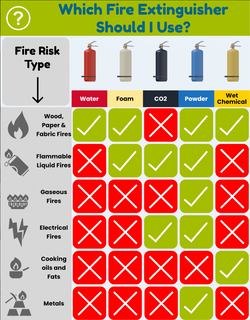
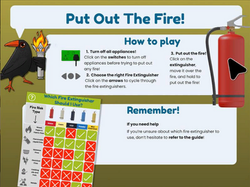
Fire mini-game: teacher uses the tutorial sheet to teach which extinguisher fits which fire type, then confirms through play and feedback.
-
NHS mini-game: teacher pauses on kit choices, asks pupils to justify the selection, then validates through interaction and outcome feedback.
-
Core loop and interaction structure (what I shaped)
-
Co-designed the core loop: map exploration → scenario prompt → decision (999 vs 111) → mini-game drill → feedback → replay for reinforcement.
-
Pushed the “learning-through-action” direction so the demo relied on interaction and feedback rather than long text explanations.
Mini-games as concept drills (demo scoping)
-
Helped scope the pitch build toward the two clearest, brief-aligned drills to protect clarity and build stability:
-
NHS (first aid kit concept drill)
-
Fire (extinguisher selection and response)
-
-
Positioned the mini-games as repeatable concept drills so learning comes from practice and repetition.


Setting and audience relevance (Cornwall map and landmarks)
-
Supported the decision to set the demo in Cornwall and use recognisable landmarks so scenarios feel local and personally close for the target audience.
-
Used landmarks as engagement anchors to strengthen recognition and context, “I know that place” and “this could happen near me”.
.jpg)

Emblem and mascot (functional identity)
-
Backed the choice of the Cornish chough as an emblem and mascot for local relevance and resilience symbolism.
-
Help carry the mascot into tutorial sheets to make guidance approachable for pupils and practical for adults.
 |  |  |
|---|---|---|
 |  |
PLAYTEST & QA
QA and playtest loop (one line): Validate core functionality, capture issues consistently, triage, implement fixes, and re-check until changes are verified in a new build.
QA execution and structured capture
-
Ran functionality checks across core flows (map navigation, prompts, mini-game start/end, scoring/feedback, UI states) to catch regressions early.
-
Created and used templates (bug template and test matrix) so findings were consistent, actionable, and easy to re-check.
-
Built a dedicated Fire Extinguisher test matrix to verify that the correct extinguisher resolves the correct fire type reliably.



One iteration example (before and after)
-
Before: Playtests showed the experience needed clearer “how to play” support, especially for guided classroom delivery.
-
Change: Assisted in creating simple tutorial sheets using the mascot as a consistent guide layer (what to do, what to click, what the outcome means).
-
Result: More consistent onboarding and smoother guided sessions, less time explaining rules, more time practising safety protocols through play.


RECEPTION
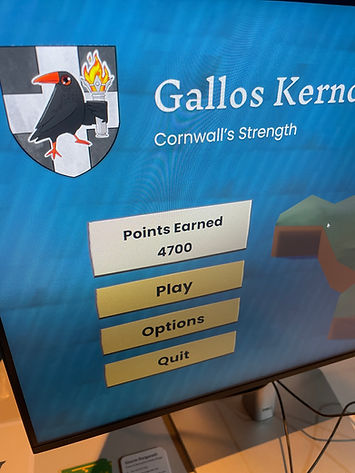
We showcased Gallos Kernow at Falmouth University’s Games Expo and observed strong engagement from children and parents, plus useful feedback from adults with education-industry perspectives.
-
Players repeatedly replayed scenarios to improve their score, with the highest observed score reaching 4700. The light competition encouraged repetition, reinforcing basic safety protocol awareness through practice.
-
Children stayed engaged and talked about what to do in common emergencies, while parents often wanted to try the demo themselves.
-
Feedback from an education professional described the demo as a strong conversation starter and a practical way to introduce safety concepts in an age-appropriate, interactive format.
-
Conversations at the expo suggested broader use cases beyond classrooms, supporting our “guided experience” positioning.
_JPG.jpg)

FURTHER EXPANSION & IMPROVEMENTS
Production improvements (what I would do next)
-
Onboarding and role clarity earlier: add a short onboarding checklist and role expectations, especially if responsibilities shift mid-project, to keep ownership and delivery consistent.
-
Pitch-build fidelity guardrails: set clear timeboxing and fidelity targets from day one so the team does not over-invest in detail.
-
End-of-day or end-of-sprint check-ins: encourage quick peer check-ins so teammates can cover gaps within skill sets, while I keep ownership accurate via the task board and stand-ups.
Design improvements (future ideas I would explore, no fail state)
-
Protocol-first XP: progression based on following correct safety steps and decisions, not just speed.
-
Efficiency as a bonus: extra XP for executing the protocol efficiently once understood, without punishing slower learners.
-
Unlock-based progression: XP unlocks new areas or scenarios, making progress intuitive and motivating repeat practice.
Expansion (how I would scale it)
-
Regional rollout: expand beyond Cornwall by adding new counties or regions while keeping the same core loop.
-
Local identity layer: rotate landmarks and introduce a county-specific mascot to keep the “this could happen near me” feeling.
-
Mascot-led journey: structure scenarios as a guided route where pupils assist the mascot across the map.
TAKEAWAYS
-
Turn the brief into a shippable slice: I protected the pitch demo by locking clear priorities and a Core vs Later boundary, focusing on what best served the stakeholder goal.
-
Run on visibility: a single task board with owners, status, blockers, and follow-ups kept delivery predictable and handoffs clear across disciplines.
-
Use rhythm to stay on track: Scrum-style ceremonies surfaced blockers early, aligned ownership, and kept momentum steady without last-minute crunch.
-
Decide with a framework: we converged faster when ideas were tested against learning goals, audience fit, feasibility, and demo impact, then recorded as owners plus next actions.
-
Manage throughput, not just tasks: when delivery drift or bottlenecks appeared, I resized and redistributed work, increased check-ins, and escalated calmly when needed to protect the milestone.
-
Design for real use, not just play: framing the game as a guided experience shaped prompts and tutorial support so teachers or parents can facilitate learning in classrooms or at home.
-
Interaction beats exposition: decision prompts and mini-game drills reinforced safety protocols through feedback and repetition, supported by a no-fail structure that encourages retry and confidence.
-
Quality needs structure: bug templates, test matrices (including extinguisher mapping), and re-checks turned feedback into verified improvements and a cleaner demo.
GALLERY


